
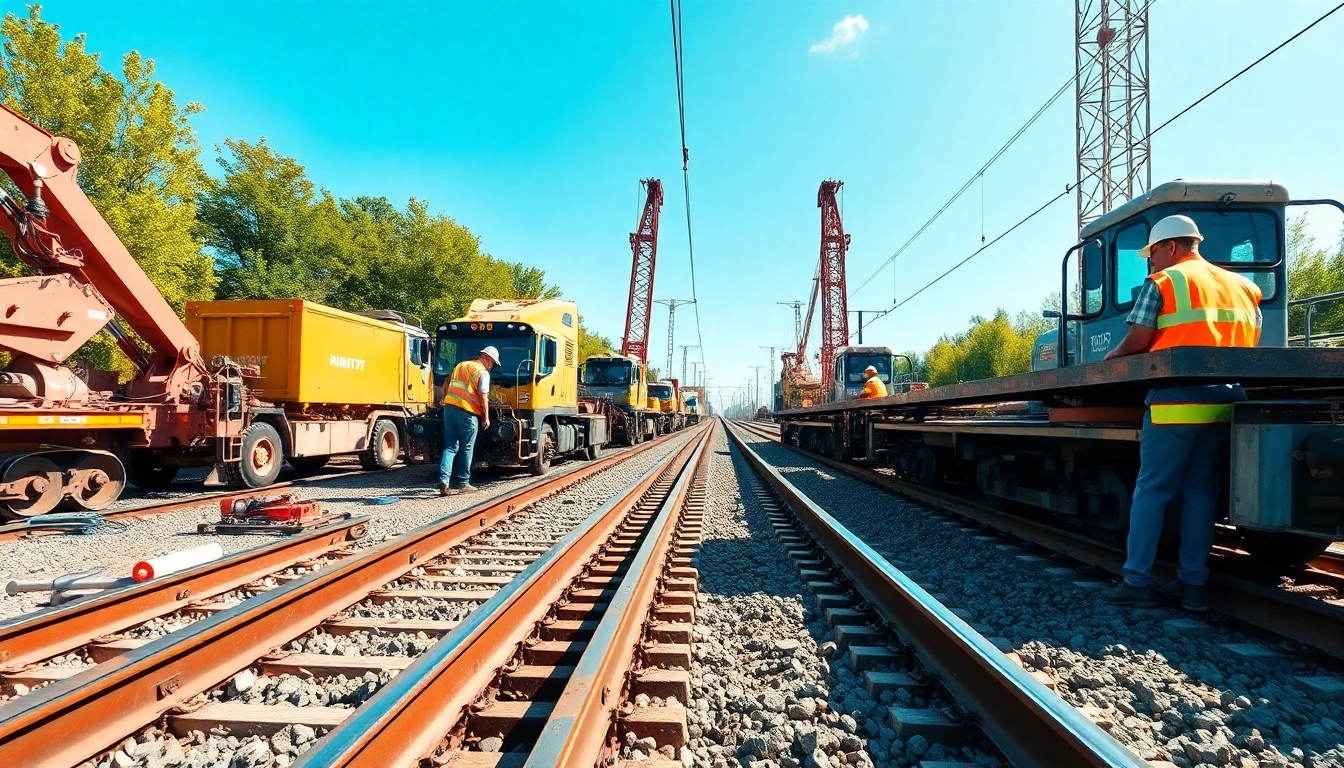
Understanding Railroad Construction
Definition and Importance of Railroad Construction
Railroad construction refers to the process of building and maintaining railroads, including laying tracks, constructing bridges, and installing necessary infrastructure. This foundational work is essential for the transportation of goods and passengers across vast distances. Rail transport is lauded for its efficiency, cost-effectiveness, and minimal environmental footprint compared to road and air travel. The economic implications of functional railroad networks are immense, enabling the movement of resources, bolstering trade, and fostering economic growth in connected regions. The significance of Railroad Construction also extends into job creation within the industry, supporting skilled labor and providing educational opportunities in engineering, project management, and other related fields.
Historical Overview of Railroad Construction
The history of railroad construction dates back to the early 19th century, with the introduction of steam locomotives and the establishment of railway networks. The first modern railway, the Stockton and Darlington Railway, opened in England in 1825. This innovation led to an explosion of railway lines across Europe and North America, facilitating trade and migration. By the late 1800s, railroads had become the backbone of industrialized economies, enabling the transport of raw materials and finished goods on an unprecedented scale. The construction methods utilized have evolved dramatically, from manual labor with rudimentary tools to sophisticated machinery and technology that facilitate rapid construction and minimal disruption. Understanding this evolution provides critical insights into modern practices and methodologies.
Modern Trends in Railroad Construction
Today’s railroad construction is heavily influenced by technological advancements and a growing emphasis on sustainability. Key trends include the integration of smart technologies such as GPS tracking for trains, drone inspections for infrastructure, and the use of modular construction techniques that streamline the building process. Moreover, there is a significant push toward electrification and the use of alternative energy sources in railway systems, minimizing carbon emissions and enhancing energy efficiency. As nations increasingly focus on infrastructure to drive economic recovery, the importance of adapting to these trends cannot be overstated.
Key Components of Railroad Construction
Track Design and Materials
The design of railroad tracks is a crucial component of railroad construction, encompassing the type of track layout, curvature, and gradient, as well as the materials used in construction. Modern railroad tracks are typically made of high-quality steel, supported by ballast and concrete ties to ensure stability and longevity. The track design must accommodate different types of trains, including freight and passenger services, often requiring specialized materials for high-speed applications. In addition to structural integrity, track design involves precise engineering to handle dynamic forces during train operations, thus ensuring safety and efficiency.
Infrastructure and Support Structures
Railroad infrastructure includes bridges, tunnels, signals, and other vital components that support operations. Each element must adhere to rigorous standards and best practices to guarantee safety and functionality. For instance, bridges must be designed to withstand the weight of heavy locomotives and environmental pressures, while tunnels must facilitate proper ventilation and drainage. Collaboration with civil engineers during the design and construction phase is crucial for ensuring that infrastructure accommodates current and future rail service demands. The integration of technology, such as automated signaling systems and real-time monitoring solutions, enhances the operational efficacy of these infrastructure elements.
Safety Standards and Regulations in Railroad Construction
Safety is paramount in railroad construction, governed by a multitude of regulations and standards at federal and state levels. The Federal Railroad Administration (FRA) outlines strict guidelines focusing on construction practices, operational safety, and maintenance protocols. Compliance with these regulations not only protects workers and infrastructure but also ensures public safety. Regular audits and inspections are necessary to maintain compliance and identify potential risks before they lead to accidents. The use of advanced safety technologies, like automatic train control systems, is becoming increasingly common in contemporary railroad construction projects.
Challenges in Railroad Construction
Environmental Concerns and Mitigation Strategies
Railroad construction can pose environmental challenges, such as habitat disruption, soil erosion, and pollution. Mitigating these impacts requires careful planning and adherence to environmental regulations. Techniques such as environmental impact assessments (EIAs), rerouting projects to minimize ecological damage, and implementing green construction practices are increasingly employed. Stakeholder engagement with local communities and environmental groups also plays a vital role in addressing concerns and fostering collaborative solutions. Innovating with low-impact construction techniques that reduce energy consumption and resource depletion is essential for sustainable railroad construction.
Cost Management in Railroad Construction Projects
Cost management is critical in railroad construction projects, which are typically capital-intensive and lengthy. Accurate budgeting, resource allocation, and risk assessment contribute to effective financial planning. Utilizing advanced project management software facilitates better tracking of expenses and resource use, enabling contractors to adjust plans proactively. Identifying cost-saving opportunities, such as bulk material purchasing or innovative construction techniques, can significantly affect the project’s bottom line. Furthermore, integrating financial forecasting tools allows for better long-term strategic planning amidst fluctuating economic conditions.
Labor Shortages and Training in the Industry
The railroad construction industry faces persistent labor shortages, exacerbated by an aging workforce and a lack of skilled workers entering the field. To combat this issue, companies are investing in training programs and partnerships with educational institutions to cultivate talent. Apprenticeship programs, vocational training, and community outreach initiatives aim to attract a diverse workforce. Emphasizing the career pathways available in rail construction can help to counteract negative perceptions of the industry while also addressing the growing demand for skilled labor as railroad networks expand.
Best Practices for Successful Railroad Construction
Project Management Techniques in Railroad Construction
Employing effective project management techniques is crucial for successful railroad construction. This includes methodologies like Lean Construction, which emphasizes value creation while minimizing waste, and Agile methods, which allow for flexibility and adaptability in project execution. Regularly conducting project reviews and stakeholder meetings enhances communication and ensures alignment with project goals. Additionally, adopting digital project management tools can streamline operations and foster collaboration among teams, ultimately leading to improved project outcomes.
Technology and Innovation in Railroad Construction
Innovation plays a pivotal role in modernizing railroad construction practices. The adoption of technologies such as Building Information Modeling (BIM), 3D printing, and GIS mapping allows for more precise planning and execution of projects. Drones are increasingly utilized for surveying and inspection tasks, providing high-resolution images and data that enhance decision-making processes. Investing in research and development of future technologies, including autonomous vehicles and smart railway systems, will further transform the landscape of railroad construction.
Collaboration and Stakeholder Engagement
Collaboration among stakeholders is vital for the success of any railroad construction project. Maintaining open lines of communication between project managers, crew members, clients, and regulatory bodies fosters a cooperative environment that enhances project efficiency and transparency. Engaging stakeholders early in the planning process helps to address concerns and align objectives. Utilizing collaborative platforms and communication tools can facilitate ongoing dialogue and feedback throughout the project lifecycle.
Future of Railroad Construction
Emerging Technologies Impacting Railroad Construction
Emerging technologies are poised to reshape railroad construction in numerous ways. Innovations such as augmented reality (AR) enable virtual simulations of construction projects, allowing teams to visualize challenges before actual work begins. Technologies like Internet of Things (IoT) sensors enhance monitoring capabilities for tracks and infrastructure. Further developments in artificial intelligence (AI) and big data analytics can improve decision-making processes, helping to optimize resource allocation and project timelines through predictive modeling.
Sustainable Practices in Railroad Construction
As awareness of environmental issues grows, there is an increasing focus on sustainable practices within railroad construction. This includes using recycled materials, adopting energy-efficient machinery, and prioritizing green spaces in project planning. The integration of renewable energy sources, such as solar panels, into rail infrastructure can reduce the carbon footprint associated with operations. Additionally, promoting public transportation through expanded rail networks contributes to decreased reliance on automobiles, further advancing sustainability goals.
Forecasting Future Trends in Railroad Infrastructure
The future of railroad infrastructure will likely be marked by enhanced connectivity, increased automation, and innovative funding strategies. Public and private sector partnerships may become more common, allowing for shared resources and risks in large-scale projects. As cities grow, urban transit systems will expand, requiring flexible and adaptable rail solutions. Moreover, the integration of freight and passenger services into a cohesive transportation network will be pivotal in meeting the demands of modern economies.
FAQs about Railroad Construction
What are the main components of railroad construction?
Main components include track design, infrastructures like bridges and tunnels, signaling systems, and safety regulations that guide construction practices.
How does technology impact railroad construction?
Technology enhances project efficiency through the use of drones for surveying, 3D modeling for design, and predictive analytics for cost management and scheduling.
What safety standards govern railroad construction?
Safety standards are primarily guided by regulations from the Federal Railroad Administration (FRA), focusing on construction practices and operational safety measures.
What are common challenges faced in railroad construction projects?
Common challenges include environmental impacts, funding shortages, labor shortages, regulatory compliance, and the need for modernizing aging infrastructure.
How is sustainability incorporated into railroad construction?
Sustainability practices include using recycled materials, energy-efficient machinery, and planning for green spaces, along with integrating renewable energy sources into rail systems.
Contact Information
Email: [email protected]
Call Us: (855) 920 – 8722
Address: 3950 Fossil Creek Boulevard, Suite 106 Fort Worth, TX 76137